Beyond Geography Matters: Paper presented at the German Congress for Geography

Three weeks ago (October 4th), I presented a paper at the German Congress for Geography, Humboldt University Berlin. The paper, entitled Beyond Geography Matters: Negotiating Territoriality and Functionality in Theory and Practice was co-authored with Annegret Repp of the Leibniz Centre for Agricultural Landscape Research in Müncheberg and HafenCity university Hamburg.

The paper sought to critically examine the actual and potential governance capacity of European spatial planning with in light of the emergence of increasingly spatial approaches to governance within the environmental policy field. How do environmental governance actors negotiate territorial and functional spaces in practice? How can the concepts of soft spaces, spatial fit and variable geometry contribute to an analytical understanding of emerging new spaces of environmental governance? Can governance actors move beyond state-centric metageographies to engage with cross-boundary functional spaces?

The abstract is reproduced here:

The multi-level and multi-sectoral governance context of the European Union presents particular challenges of integration across spatial scales, territories and policy sectors. Indeed, a number of studies have highlighted the potential for EU operational programmes to lead to unintended and contradictory outcomes due to problems of coordination and misalignment at the levels of both policy formulation and implementation. The integration of strategic spatial and environmental objectives into sectoral policies remains a key challenge for governance in Europe, arguably requiring changes in institutional structures, governance cultures and operational paradigms at all spatial scales. At the same time it is possible to identify a renewed focus on the spatiality of governance as actors experiment with news of working with functional spaces, crossing established territorial boundaries. In this context, space has become a focus for and means towards cross-sectoral policy integration. River basin management under the EU Water Framework Directive, protected areas under the Habitats Directive and marine spatial planning each represent prominent examples of the emergence of explicitly spatial perspectives under EU environmental directives each of which have also generated critical discussion in the academic literature. Paradoxically, the integrative potential of spatial perspectives in environmental policy has begun to be recognised at the same as academic and policy debate on integrated and strategic forms of European spatial planning have lost momentum and become displaced by less ambitious concepts and discourses of territorial cohesion and territorial governance. We argue that European spatial policy in its current form fails to move beyond its claim that geography matters, to constructively contribute to the question of how sectoral policy (including environmental policy) should address the seemingly elusive spatial dimension. Indeed there has been very limited engagement with academic and policy debates on territorial cohesion and territorial governance in the environmental management literature and similarly limited attention paid to the environmental dimension of territorial cohesion. In the German context, experimental governance approaches such as sustainable land management and urban-rural energy regions nevertheless indicate the potential for integrated spatial-environmental approaches.

Specifically, the paper compares and contrasts the analytical perspectives of spatial fit and soft spaces, both of which move some of the way towards explaining the ways in which governance actors work with multiple socially constructed spatialities. With their separate origins in the environmental management and spatial planning literatures respectively these concepts have developed in isolation from each other and have not previously been brought into dialogue.

Soft Spaces in Europe: Re-negotiating governance, boundaries and borders published in Routledge Regions and Cities Series

The book: Soft Spaces in Europe: Re-negotiating governance, boundaries and borders has been published this summer. It is edited by Phil Allmendinger (Cambridge), Graham Haughton (Manchester), Jörg Knieling (Hamburg) and Frank Othengrafen (Hannover).

Soft Spaces Book Cover

Through five metropolitan  and three cross-border case studies, edited volume greatly contributes to a comparative understanding of soft spaces as an emerging element of the contemporary governance landscape in northwest Europe. The author of this blog (Cormac Walsh) was responsible for the case studies of the island of Ireland and Fehmarn Belt region (Chapters 7 & 9) and contributed to the study of the Hamburg metropolitan region (Chapter 3). Previous versions of the chapters were presented at international conferences in Tampere, Finland (Fehmarn Belt) and Dublin, (island of Ireland).

Here is the official blurb from the Routledge website:

The past thirty years have seen a proliferation of new forms of territorial governance that have come to co-exist with, and complement, formal territorial spaces of government. These governance experiments have resulted in the creation of soft spaces, new geographies with blurred boundaries that eschew existing political-territorial boundaries of elected tiers of government. The emergence of new, non-statutory or informal spaces can be found at multiple levels across Europe, in a variety of circumstances, and with diverse aims and rationales.

This book moves beyond theory to examine the practice of soft spaces. It employs an empirical approach to better understand the various practices and rationalities of soft spaces and how they manifest themselves in different planning contexts. By looking at the effects of new forms of spatial governance and the role of spatial planning in North-western Europe, this book analyses discursive changes in planning policies in selected metropolitan areas and cross-border regions. The result is an exploration of how these processes influence the emergence of soft spaces, governance arrangements and the role of statutory planning in different contexts. This book provides a deeper understanding of space and place, territorial governance and network governance.

Planning Approaches for Sustainable Land Management: International Examples and Innovative Solutions

A report reviewing international approaches to sustainable land management from a planning perspective, commissioned under the  ‘Sustainable Land Management’ applied research programme funded by the German federal ministry for Education and Research has just been published. The report (in German) is the output of more than twelve months work at HafenCity University in 2012 and 2013. The English language abstract is reproduced below. The full report is available to download from the website of the research  programme’s scientific coordination (Leibniz- Centre for Agricultural Landscape Research – ZALF).


Abstract

The expertise ‘Planning Approaches for a Sustainable Land Management’ was commissioned by the scientific coordination team of Module B – Innovative System Solutions (Leibniz Centre for Agricultural Landscape Research – ZALF) of the Sustainable Land Management research pro-gramme, funded by the Federal Ministry for Education and Research. The concept of sustainable land management brings with it the potential for an integrated research, policy and practice perspective which transcends disciplinary boundaries and focuses on the management of land as a finite resource in the interests of the common good. In particular, sustainable land manage-ment seeks to combine perspectives from spatial planning, agriculture and forestry and envi-ronmental resource management. This discussion paper focuses on the potential contribution of innovative international approaches from the fields of planning and governance to sustainable land management. The selection of international approaches followed a review of the interna-tional scientific, applied research and policy literatures. As part of Module B, the selection of international approaches also sought to address the goals of the wider funding measure and to respond to the requirements of the researchers and practitioners working within the projects funded in Module B. Two expert workshops held in March and April 2013 provided important feedback on the selection of innovative approaches as well as the methodology of the expertise. The final selection of innovative approaches comprises the following:

 Adaptive Co-Management
 Socio-technical Transitions-Management
 Strategic Spatial Planning and Development
 Spatial Fit, Functional Governance and Variable Geometry
 Spatial Decision Support Systems and Scenario Development
 Green Infrastructure
 Brownfield Redevelopment and Urban Land Management
The estimated relative contribution of each approach is assessed according to eight thematic criteria and in each case graphically represented through network diagrams. This qualitative assessment may be understood as a tool for researchers and practitioner experts to make a quick assessment regarding the relevance of a particular approach to the specific challenges or tasks they face.

The discussion paper concludes that the development of innovative solutions for sustainable land management in Germany can draw significantly on international approaches where experi-ence has demonstrated the relative merits of a wide range of distinct approaches. Learning from international experience must, however, always be approached with a degree of caution. Rather than the simple transfer of best or good practice approaches from abroad, we would, however emphasise the importance of sensitivity to context. Socio-economic, cultural, political, legal and environmental factors provide the framework conditions through which sustainable land man-agement is practised. Indeed, it is also possible to learn from policy failure and shortcomings associated with individual approaches which practical experience in other countries have served to demonstrate. The approaches elaborated here also reflect the goal-orientation and research approach of the funding measure Sustainable Land Management itself. Indeed this expertise has served to confirm the commitment of the Sustainable Land Management to a transdisciplinary approach including engagement with a wide range of scientific disciplines and practice-based stakeholders coming from diverse professional backgrounds. The importance of integrated perspectives, crossing sectoral and professional boundaries is central to the adaptive co-management, strategic spatial planning and functional governance approaches presented above. Sustainable land management, through its practice-oriented approach seeks to combine strate-gic planning and governance with practical implementation measures and the development of targeted solutions to address specific challenges. This key relationship between medium to long-term strategy-making and short-term implementation is similarly found as a core element of the approaches presented here. This is particularly the case with regard to socio-technical transition management, strategic spatial planning, green infrastructure and brownfield redevelopment. Finally, the expertise highlights the importance of a focus on communication. Core concepts such as green infrastructure, ecosystem services and adaptive governance can play a central role in developing awareness and understanding and interest among diverse stakeholders. Indeed, sustainable land management, when associated with the principles and values outlined here, has the potential to act as powerful concept. Furthermore the discussion has identified a number of farther reaching research questions that might be of interest for further elaborating the process and governance dimension of sustainable land-management.


Found in Translation? Crossing language divides in spatial planning research

A paper I co-authored with Simone Allin of Nottingham Trent University and originally published as a working paper of the National Institute of Regional and Spatial Analysis in Ireland in 2010 has been reproduced in Turkish translation in the journal Planlama, one of the leading urban and regional planning journals in Turkey (thanks to a translation by Dr. Savaş Zafer Şahin of Atilim University).

The paper ‘Strategic Spatial Planning in European City-Regions: Parallel Processes or Divergent Trajectories?‘ drawing on a comparison of the Dublin and Erfurt city-regions called for a grounded, context-sensitive approach to comparative research on spatial planning in Europe, recognising the role of distinct planning cultures but also the need to engage with the different schools of planning thought found in the Anglophone and German language literatures. Indeed a subsquent much revised version of the paper, published as a peer-reviewed article in International Planning Studies, made further specific reference to the challenges of working across language divides. From this perspective, it is fitting that the paper has found its way into a Turkish journal  where it may go on to inform approaches to comparative spatial planning research in a wider context. Coincidently I have also had the pleasure to welcome a Turkish planning professor as a sister-in-law over the Summer, which will undoubtedly help to further my (very limited) knowledge of planning and urban development in this rapidly changing country.

The English-language abstract is reproduced below:

Abstract

Drawing on recent experiences of strategic spatial planning in two city-regions  in Europe, the paper seeks to challenge dominant narratives of the emergence  of strategic spatial planning as a uni-dimensional process of policy  convergence. Recognising a need for fine-grained analysis of practices of  spatial planning in diverse territorial and institutional contexts, the paper presents a framework for contextualised comparative analysis, identifying multiple levels of differentiation. The application of this comparative framework is subsequently illustrated with reference to the two city-regions of  Dublin and Erfurt. The paper concludes with an outline of an agenda for further research.

The Turkish title is Avrupa Kent-Bölgelerinde Stratejik Mekânsal Planlama: Paralel Süreçler mi Farklılaşan Yörüngeler mi?


Coastal Landscapes and the Spatial Separation of Nature and Culture

As sociologists of science such as Bruno Latour (1991) and critical political ecologists have persuasively argued, the separation of nature and culture is an artifact of modern society which does not hold up to closer scrutiny. In a forthcoming workshop paper, I argue that nature protection practices are implicated in the creation and perpetuation of a spatial separation of ‘nature’ and ‘culture’ which may hinder the development of adaptive approaches to the management of socio-ecological systems.

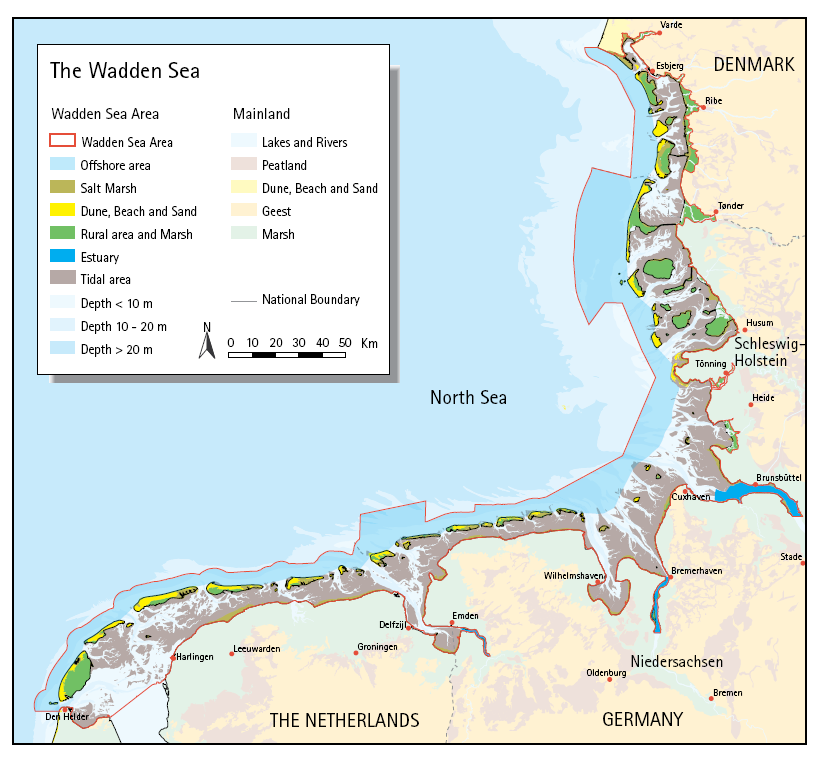
I will present the paper (abstract below) at the forthcoming workshop of the German working group on landscape research (Arbeitskreis Landschaftsforschung). The workshop is organised by Kira Gee (University of Liverpool) and Martin Döring (University of Hamburg) and will take place at the Institute of Geography in Hamburg. The workshop focuses on sea, coast and river landscapes and aims to explore theoretical, methological, planning and empirical aspects. (The German title is: Meeres-, Küsten- und Flusslandschaften: Theoretische, methodische, planungspraktische und empirische Zugänge für die Analyse von Wasserlandschaften). My own paper represents the first, conceptual output of my new reseach focus on metageographies and spatial frames in coastal management which will focus empirically on the trialteral Wadden Sea region extending from Esbjerg in Denmark to Den Helder in the Netherlands abd encompassing the North Sea coasts of Schleswig-Holstein and Lower Saxony in northern Germany.

Wadden Sea

Figure: The Wadden Sea, Common Wadden Sea Secretariat (2010) Wadden Sea Plan, p. 57,

The role of culturally embedded metageographies in the socio-spatial compartmentalisation of nature and culture: Insights from the Wadden Sea Region

Cormac Walsh

Our understanding and perception of the social world is underlain by culturally embedded spatial structures or metageographies which help us at an unconscious level to order our knowledge of the world. Research in political geography and spatial planning has pointed to the dominance of state-centric ‘container space’ metageographies in shaping the underlying geography of both the social sciences and planning practice. This paper examines the role of such metageographies in the construction of another form of container space; that of the trilateral Wadden Sea as a bounded space located in front of the dyke-protected coastline. In this context, a sharp spatial distinction has been established between a natural landscape in front of the dykes and a cultural landscape behind the dykes. This distinction, although in practice contested, continues to play a significant role in the institutional-discursive construction of the Wadden Sea Area and Region. The paper argues for greater attention to the ways in which nature and culture become separated in the discursive construction and institutionalisation of landscapes and the role of underlying metageographies in the production and reproduction of the socio-spatial compartmentalisation of nature and culture.